Hands-on Science Workshops
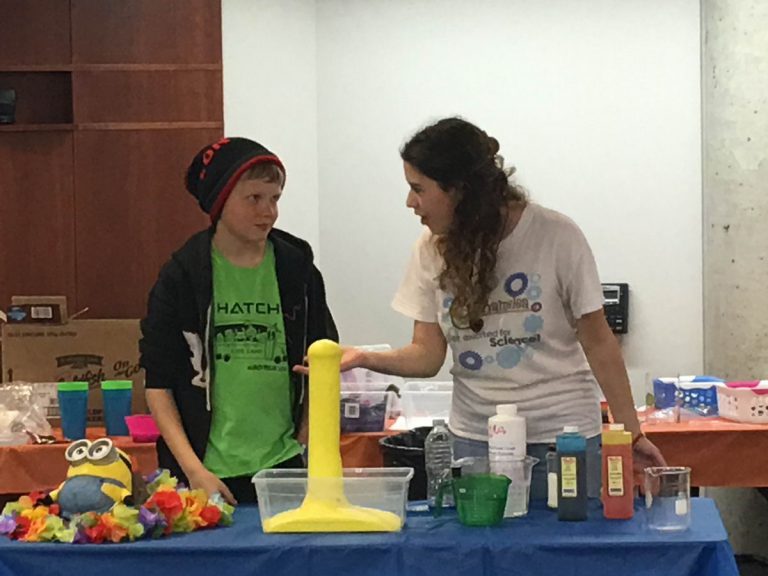
Chamelea brings hands-on science workshops to schools, after-school programs, camps, and daycares that captivate and inspire!
Our interactive experiments and enchanting stories reveal the brilliant scientist within every student—no matter the organization or age group.
School Aged Kids:
Immersive STEM Workshops for Schools
What We Provide:
- Professional STEM workshops for students ages 3-12, led by qualified instructors
- Top-quality materials to conduct hands-on experiments
- Flexible pricing & packages to suit your needs
After-School Time Well-Spent
What We Provide:
- Interactive 60-minute workshops developed for school-age students
- Easy planning and hassle-free organizing
- Talented, trained instructors who are passionate about science
EXPLORE OUR WORKSHOPS
Pre-School & Under:
Scientific Introduction for Little Ones
What We Provide:
- 30 to 60-minute science workshops designed for kids ages 3-5
- Hands-on programming led by trusted instructors
- Themed topics young kids love, from dinosaurs and planets to colour and sound
Discovers Just for Toddlers
What We Provide:
- 30-minute introductory STEM workshops for kids ages 1.5-3
- Toddler-centred topics including sound, colour, and tactile materials
- Knowledgeable, attentive instructors who are experienced at working with young children
Take a Trip to the Home of Spectacular Science
Are we there yet?! Give your students a fully immersive experience with a field trip to Chamelea, featuring our science lab, Imagination Playground, and much more.
LIFE SYSTEMS
Animals workshop (Gr.1-2)
Why polar bears and owls are white? How penguins keep warm? Why spiders don’t stick to their web? What is common between glow sticks and lizards?
Gimme five (Gr. 1-2)
Listen up! Seeing is believing when students examine the wonders of five senses. Students look for taste buds and discover sound waves.
Spiders-spiders don’t get stuck (Gr.1-3)
Are spiders insects? Why spiders don’t get stuck in their own webs, how spiders’ venom makes its insect victim into a kind of bug “soup”?
How do plants get food? (Gr.3)
Students take a look inside the seed. They make starch test, create seed balls and experiment with jumping seeds.
Human body workshop (Gr.5)
Students learn about the human body and the amazing things that it can do. They meet “Mr. Bones” and learn all about our skeletal system, about the parts of our body that we can see, and some of the parts that we cannot see.
Amazing yeast neither plant nor animal microscopic organisms (Gr.6-8)
Is yeast alive? Can little brown grains of yeast grow? What type of food would yeast prefer? Why do we call yeast exploding animals? Blow up balloons and erupt volcanoes just with the help of yeast.
The smallest living thing or incredible cell (Gr.8)
Do you know what your body is made of? It’s made of skin, bone, blood, muscles and fat. But what are these made of? All the different parts of your body are made up of tiny living things called cells. Students make a cell model from various food items. Each food item will represent a specific organelle of the cell. When the project is completed, the cell model is edible.
Matter and Energy
Hot and cold chemistry ( Gr.1)
Let’s explore the awesome world of chemistry! Learn how to create the heat and cold in the class using chemicals and small living organisms.
• This workshop also covers ideas from Life Systems unit
Frozen winter workshop (Gr. 1-2)
It’s Winter Wonderland! With rain, snow, and wind, weather offers an ever-changing variety. In these Winter wonders workshop students create their own ice sculptures, make snow in the classroom and learn haw animals and insects adapt to the cold weather.
• This workshop also covers ideas from Life Systems unit
Pirateology (Gr.1-4)
Students take an adventure back in time to understand the life of pirates. They learn knot tying and flag language, experiment with chemical reactions to investigate treasures, learn how to fish an ice cube, explore the writing and reading of secret messages using acid-base chemistry.
Cooking with science (Gr.1-5)
Cooking with science workshop teaches students how to create awesome snacks and drinks without ovens and fridges, using nothing but science. Students get to make their own fizzy drink, ice cream and gummy worms.
Science magic (Gr.1-6)
Static electricity, gravity, polymers, and optical illusions…. Is it magic or is it science? Students marvel at the magic, learn how to do the tricks, discover the science that makes the magic seem to happen, and learn a little more about the world.
Amazing water (Gr.2)
Water is everywhere. Water is an unusual substance with special properties. Students investigate: 1. How does water rise from the roots of a redwood tree to the very top? 2. How do insects walk on water? 3. Why does ice float rather than sink?
Finding Nemo (Gr.2-5)
Students uncover the origin of the mystery sound in a seashell; make rainbow fish using acid-base chemistry and find out why it’s easier to float in the ocean than in the swimming pool.
The secret of Lava Lamp (Gr.2-5)
Students understand the concept of density, experiment with the liquids with different densities. Uncover the secret of lava lamp and make their own.
Amazing polymers (Gr.2-5)
Students find a secret polymer in a real baby diaper, grow water crystals and explore the things made out of polymers around them.
Sink and Float workshop (Gr.3)
Students investigate why paper clip will sink and cork or big piece of wood would float, they find out how lemon rind and life jacket are connected.
Static electricity (Gr.3-6)
You walk across the rug, reach for the doorknob and……….ZAP!!! You get a shock. Or, you come inside from the cold, pull off your hat and……BOING!!! All your hair stands on end. What is going on here? The answer is: STATIC ELECTRICITY. Students create dancing cobra, remote control roller and experiment with Van de Graaff generator.
Sound of music workshop (Gr.4)
Sounds are all around us . . . cars honking, phones ringing, friends talking, and dogs barking are all sounds you are probably familiar with. So, what is sound? Students play music using water marimba, sound tubes, sound sandwich, and sound bottles.
Mix it up (Gr.5-7)
Water is a necessity in our lives. We use it every day in many different ways: to drink, wash, cook, and help get rid of waste. One of water’s most valuable properties is its ability to dissolve many substances. Students investigate solubility of different materials in the water, observe movement of molecules and find out how to separate salt from sand.
Modern science behind crime scene investigation (CSI) (Gr.5-7)
Students discover secret clues, investigate the motives of cunning suspects, and use scientific techniques of chemical reactions and paper chromatography to uncover solutions to baffling crimes.
Earth and Space Systems
The magic of making rain (Gr.1)
Rain makes the grass green and it makes your garden grow. Have you ever wondered what makes rain though? Students create rain sounds using rain stick, make cloud in the bottle and investigate precipitation and condensation of the water.
Winter wonders (Gr.1-2)
It’s Winter Wonderland! With rain, snow, and wind, weather offers an ever-changing variety. In these ‘Winter wonders’ workshop students create their own ice sculptures, make snow in the classroom and learn haw animals and insects adapt to the cold weather.
• This workshop also covers ideas from Life Systems and Matter and Energy units
Fall harvest workshop (Gr.1-3)
This special workshop introduces students to the amazing science behind Fall. The students learn how to change color of the leaves with the help of chemistry, investigate how vital is the soil for cultivating healthy crops, and how worms can help.
• This workshop also covers ideas from Life Systems unit
Why do we call Earth a “blue planet”? (Gr.2)
Students make their own ocean in the flask. They make waves and follow the journey of the water droplet around the Earth. They will investigate the properties of the water.
• This workshop also covers ideas from Life Systems and Matter and Energy units
Astronauts in outer space (Gr.2-5)
Eating is an essential activity for every living organism. Here on Earth, we humans can drive to the grocery store, visit a McDonald’s drive thru, or open the refrigerator and cupboards to choose the foods we want to eat. We can then turn on the faucet to wash ingredients and cook meals on the stove or grill, or in the microwave – all without fear of our food floating away. Astronauts do not have these same conveniences and choices. So how do they eat and cook in outer space?
• This workshop also covers ideas from Life Systems unit
Outer space explorer (Gr.3 -5)
Students discover solar system, build the sculptures from the red sand from the famous Mars planet, erupt Olympus volcano, and create snow from outer space planets.
• This workshop also covers ideas from Life Systems and Matter and Energy units
Plate Movements & Earthquakes, Volcanoes and Mountain-Making (Gr. 4)
If we could go deep, deep inside the earth, what would we find? Earth made up from layers. Students continue the journey deeper inside the earth. Do you know that it’s actually a dangerous journey? Why? Because the deeper we go, the more hot it will be. How hot? So hot, those rocks will be melted there. Students learn how mountains are build and earthquakes happened.
Tame the cruelest force of Earth (Gr. 4 )
Students get introduced to the cruelest force of Earth-volcano. They build and ”erupt” two types of volcanoes: chemical and biological. Students will investigate types and properties of the volcanic rocks.
Journey into the past (Gr.4-5)
Students explore the geologic timeline and step into the Mesozoic era. They become paleontologists while exploring and making different types of fossils.
Why are dinosaurs extinct? (Gr.4-6)
Students will delve into the asteroid and volcano theories of dinosaur’s extinction. They will observe the destroying force of rising magma and erupt their own chemical and biological volcanoes.
Planets in a Bottle (Gr.6-8)
This workshop is an exciting way for students to explore planets of the solar system by testing the viability of microscopic yeast samples. By measuring the viability of yeast samples kids will explore environmental conditions which affect the health of yeast.
• This workshop also covers ideas from Life Systems unit
Social Studies and Science
The mystery of Ancient Egypt (Gr. 3-5)
From pyramids to mummies, hieroglyphs to pharaohs, Egypt
has always fascinated kids. Discover the Land of the Pharaohs! Master the skills of making mummies. Learn Egyptian writing and solve the mystery of Great Sphinx. Investigate the stable structure of the pyramids.
• This workshop also covers ideas from Structures and Mechanisms unit
The cradle of modern science-Ancient Greece (Gr.3-5)
Ancient Greece gave our civilization an enormous quantity of scientific discoveries, monuments of art, architecture and literature. Students learn the story of the guileful gorgon medusa; create the real masterpiece of Greek mosaic art and fill themselves like Archimedes while discovering his famous law and making catapults.
• This workshop also covers ideas from Structures and Mechanisms unit
Ancient China (Gr.4-6)
Famous inventions came out of one of the world’s longest surviving civilization – Ancient China, such as block printing, singing bowls and compass. This workshop takes students to the dawn of an ancient civilization which has inspired some of the world’s greatest thinkers, inventors and inspirations. In this new Ancient China civilization workshop students discover all of those wonders.
• This workshop also covers ideas from Matter and Energy unit
For kids aged 3-5
At Chamelea Science center we have created a variety of programs for early learning child development. In a fun friendly environment your curious preschoolers will:
- Master motor skills
- Develop their sensory skills
- Explore the qualities of materials and substances
- learn to ask questions and look for answers
It is never too early for science!!!
We have developed these learning programs for kids ages from 3 to 5 years old:
- Why are dinosaurs extinct? Children delve into the asteroid and volcano theories of dinosaur’s extinction. They will observe the destroying force of magma rising and erupt their own chemical and biological volcanoes.
- The mystery of Ancient Egypt From pyramids to mummies, hieroglyphs to pharaohs, Egypt has always fascinated kids. Discover the Land of the Pharaohs! Master the skills of making mummies. Learn Egyptian writing and solve the mystery of Great Sphinx. Uncover the sacred art of the ever first perfumers and make your own cosmetics
- Icy.Fizzy.Milky Children create swirling colored designs with milk, make “dancing beans” based on chemical reaction, and discover the history and science behind ice cream.
- The secret of Lava Lamp Children understand the concept of density, experiment with the liquids with different densities. They uncover the secret of lava lamp and make their own.
- Journey deep inside our Earth Children learn about layers of the Earth, make their own sweet model of Earth. They experiment with the different types of lava and make chocolate lava pillows.
- Static electricity You walk across the rug, reach for the doorknob and……….ZAP!!! You get a shock. Or, you come inside from the cold, pull off your hat and……BOING!!! All your hair stands on end. What is going on here? The answer is: STATIC ELECTRICITY
- Astronauts and outer space Eating is an essential activity for every living organism. Here on Earth, we humans can drive to the grocery store, visit a McDonald’s drive thru, or open the refrigerator and cupboards to choose the foods we want to eat. We can then turn on the faucet to wash ingredients and cook meals on the stove or grill, or in the microwave – all without fear of our food floating away. Astronauts do not have these same conveniences and choices. So how do they eat and cook in outer space? Children discover all the secrets from this yummy workshop
- Science of Music Boom, tap, smack, cha-cha-cha. Feel, hear, and see the vibrations of sound. Test different types of instruments like water marimba, ukulele and sound tubes. They examine the loud and quiet rhythms that make music rock!
- Color splash Welcome to the exciting world of color! How fast can you make 24 different colors using only red, yellow and blue water? Children experiment by adding droplets of primary color to the 24 tiny mixing wells and create a wizard of colors. They will make a brilliant pocket-rainbow from tiny white” pebbles” that absorb up to 300 times their weight in water.
- Amazing polymers Children find a secret polymer in a real baby diaper, grow water crystals and explore the things made out of polymers around them.
- Moving molecules Children investigate the three states of matter, watch movement of tiny molecules and figure out how to distinguish hard boiled egg from the raw egg.
- Journey into the past Children explore the geologic timeline and step into the Mesozoic era. They become paleontologists while exploring and making different types of fossils.
- The magic of making rain Whether it’s raining outside or not, there are some fun rain activities. Children learn how to make cloud, make their own rain, explore rain with their senses, and discover why we see rainbows after rain.
- Food chemistry Children learn and make the fun chemicals reactions: change of colors, explosions. They make soft eggs and understand why should we clean our teeth. They polish pennies by using taco sauce and make a real butter.
- Why do we call Earth a “blue planet”? Children make their own ocean in the flask. Make waves and follow the journey of the water droplet around the Earth.
For school age kids
We have developed these programs for kids starting from the age of 6, based on their learning skills and abilities. Our programs maintain the right balance between the science facts and fun, to spark your kids curiosity about science.
Earth and Space systems
- The magic of making rain (Gr.1)
Rain makes the grass green and it makes your garden grow. Have you ever wondered what makes rain though? Students create rain sounds using rain stick, make cloud in the bottle and investigate precipitation and condensation of the water. - Winter wonders (Gr.1-2)
It’s Winter Wonderland! With rain, snow, and wind, weather offers an ever-changing variety. In these ‘Winter wonders’ workshop students create their own ice sculptures, make snow in the classroom and learn haw animals and insects adapt to the cold weather.
• This workshop also covers ideas from Life Systems and Matter and Energy units - Fall harvest workshop (Gr.1-3)
This special workshop introduces students to the amazing science behind Fall. The students learn how to change color of the leaves with the help of chemistry, investigate how vital is the soil for cultivating healthy crops, and how worms can help.
• This workshop also covers ideas from Life Systems unit - Why do we call Earth a “blue planet”? (Gr.2)
Students make their own ocean in the flask. They make waves and follow the journey of the water droplet around the Earth. They will investigate the properties of the water.
• This workshop also covers ideas from Life Systems and Matter and Energy units - Astronauts in outer space (Gr.2-5)
Eating is an essential activity for every living organism. Here on Earth, we humans can drive to the grocery store, visit a McDonald’s drive thru, or open the refrigerator and cupboards to choose the foods we want to eat. We can then turn on the faucet to wash ingredients and cook meals on the stove or grill, or in the microwave – all without fear of our food floating away. Astronauts do not have these same conveniences and choices. So how do they eat and cook in outer space?
• This workshop also covers ideas from Life Systems unit - Outer space explorer (Gr.3 -5)
Students discover solar system, build the sculptures from the red sand from the famous Mars planet, erupt Olympus volcano, and create snow from outer space planets.
• This workshop also covers ideas from Life Systems and Matter and Energy units - Plate Movements & Earthquakes, Volcanoes and Mountain-Making (Gr. 4)
If we could go deep, deep inside the earth, what would we find? Earth made up from layers. Students continue the journey deeper inside the earth. Do you know that it’s actually a dangerous journey? Why? Because the deeper we go, the more hot it will be. How hot? So hot, those rocks will be melted there. Students learn how mountains are build and earthquakes happened. - Tame the cruelest force of Earth (Gr. 4 )
Students get introduced to the cruelest force of Earth-volcano. They build and ”erupt” two types of volcanoes: chemical and biological. Students will investigate types and properties of the volcanic rocks. - Journey into the past (Gr.4-5)
Students explore the geologic timeline and step into the Mesozoic era. They become paleontologists while exploring and making different types of fossils. - Why are dinosaurs extinct? (Gr.4-6) Students will delve into the asteroid and volcano theories of dinosaur’s extinction. They will observe the destroying force of rising magma and erupt their own chemical and biological volcanoes.
Social studies and Science
- The mystery of Ancient Egypt (Gr. 3-5)
From pyramids to mummies, hieroglyphs to pharaohs, Egypt
has always fascinated kids. Discover the Land of the Pharaohs! Master the skills of making mummies. Learn Egyptian writing and solve the mystery of Great Sphinx. Investigate the stable structure of the pyramids.
• This workshop also covers ideas from Structures and Mechanisms unit - The cradle of modern science-Ancient Greece (Gr.3-5)
Ancient Greece gave our civilization an enormous quantity of scientific discoveries, monuments of art, architecture and literature. Students learn the story of the guileful gorgon medusa; create the real masterpiece of Greek mosaic art and fill themselves like Archimedes while discovering his famous law and making catapults.
• This workshop also covers ideas from Structures and Mechanisms unit - Ancient China (Gr.4-6)
Famous inventions came out of one of the world’s longest surviving civilization – Ancient China, such as block printing, singing bowls and compass. This workshop takes students to the dawn of an ancient civilization which has inspired some of the world’s greatest thinkers, inventors and inspirations. In this new Ancient China civilization workshop students discover all of those wonders.
• This workshop also covers ideas from Matter and Energy unit
Life systems
- Animals workshop (Gr.1-2)
Why polar bears and owls are white? How penguins keep warm? Why spiders don’t stick to their web? What is common between glow sticks and lizards? - Gimme five (Gr. 1-2)
Listen up! Seeing is believing when students examine the wonders of five senses. Students look for taste buds and discover sound waves. - Spiders-spiders don’t get stuck (Gr.1-3)
Are spiders insects? Why spiders don’t get stuck in their own webs, how spiders’ venom makes its insect victim into a kind of bug “soup”? - How do plants get food? (Gr.3)
Students take a look inside the seed. They make starch test, create seed balls and experiment with jumping seeds. - Human body workshop (Gr.5)
Students learn about the human body and the amazing things that it can do. They meet “Mr. Bones” and learn all about our skeletal system, about the parts of our body that we can see, and some of the parts that we cannot see.
Matter and Energy
- Hot and cold chemistry ( Gr.1)
Let’s explore the awesome world of chemistry! Learn how to create the heat and cold in the class using chemicals and small living organisms.
• This workshop also covers ideas from Life Systems unit - Frozen winter workshop (Gr. 1-2)
It’s Winter Wonderland! With rain, snow, and wind, weather offers an ever-changing variety. In these Winter wonders workshop students create their own ice sculptures, make snow in the classroom and learn haw animals and insects adapt to the cold weather.
• This workshop also covers ideas from Life Systems unit - Pirateology (Gr.1-4)
Students take an adventure back in time to understand the life of pirates. They learn knot tying and flag language, experiment with chemical reactions to investigate treasures, learn how to fish an ice cube, explore the writing and reading of secret messages using acid-base chemistry. - Cooking with science (Gr.1-5)
Cooking with science workshop teaches students how to create awesome snacks and drinks without ovens and fridges, using nothing but science. Students get to make their own fizzy drink, ice cream and gummy worms. - Science magic (Gr.1-6)
Static electricity, gravity, polymers, and optical illusions…. Is it magic or is it science? Students marvel at the magic, learn how to do the tricks, discover the science that makes the magic seem to happen, and learn a little more about the world. - Amazing water (Gr.2)
Water is everywhere. Water is an unusual substance with special properties. Students investigate: 1. How does water rise from the roots of a redwood tree to the very top? 2. How do insects walk on water? 3. Why does ice float rather than sink?
- Finding Nemo (Gr.2-5)
Students uncover the origin of the mystery sound in a seashell; make rainbow fish using acid-base chemistry and find out why it’s easier to float in the ocean than in the swimming pool. - The secret of Lava Lamp (Gr.2-5)
Students understand the concept of density, experiment with the liquids with different densities. Uncover the secret of lava lamp and make their own. - Amazing polymers (Gr.2-5)
Students find a secret polymer in a real baby diaper, grow water crystals and explore the things made out of polymers around them. - Sink and Float workshop (Gr.3)
Students investigate why paper clip will sink and cork or big piece of wood would float, they find out how lemon rind and life jacket are connected. - Static electricity (Gr.3-6)
You walk across the rug, reach for the doorknob and……….ZAP!!! You get a shock. Or, you come inside from the cold, pull off your hat and……BOING!!! All your hair stands on end. What is going on here? The answer is: STATIC ELECTRICITY. Students create dancing cobra, remote control roller and experiment with Van de Graaff generator. - Sound of music workshop (Gr.4)
Sounds are all around us . . . cars honking, phones ringing, friends talking, and dogs barking are all sounds you are probably familiar with. So, what is sound? Students play music using water marimba, sound tubes, sound sandwich, and sound bottles. - Mix it up (Gr.5-7)
Water is a necessity in our lives. We use it every day in many different ways: to drink, wash, cook, and help get rid of waste. One of water’s most valuable properties is its ability to dissolve many substances. Students investigate solubility of different materials in the water, observe movement of molecules and find out how to separate salt from sand. - Modern science behind crime scene investigation (CSI) (Gr.5-7)
Students discover secret clues, investigate the motives of cunning suspects, and use scientific techniques of chemical reactions and paper chromatography to uncover solutions to baffling crimes.
Toddler Science
or Big science for little hands
This program is intended to serve as a starting point and inspiration for scientific explorations. Your children will be involved in the wide range of hands-on science activities and explore subjects like magnets, bubbles, sound, color, and mysterious mixtures. These activities will spark excitement for discovering, exploring, and inquiring. Chamelea center toddler’s workshop is 30 minutes of fun, interactive discovery. Children will see, touch, taste, hear and smell what science is all about!
Making kitchen music
Rummaging through cabinets and low drawers is usually the firs toddler of business for very young children when they are in the kitchen. Let’s make some music from the truly interesting pots, pan sand dull wooden and plastic utensils. What kinds of sounds can children make with different materials? By exploring the properties of different materials we will introduce the little scientists into the world of sound.
Discovery science bottles
Those bottles will inspire the young kids for scientific explorations. Kids will explore the exciting science like mixtures, bubbles, magnets, sound, sink and float, colors through those bottles.
Hot and cold adventure
Let’s explore the awesome world of chemistry! Learn how to create the heat and cold in the class using chemicals and small living organisms. Young scientist will master their first chemistry skills and feel all the chemical reactions.
Potions, potions, potions
We will bring wizard science to your toddlers with this workshop. We will create bubbling potions, glowing potions, slimy potions, and art potions.
Pre-School Science
Chamelea center pre-school workshop is 30 – 60 minutes of fun, interactive discovery. Children will see, touch, taste, hear and smell what science is all about!
All our preschool activities are appropriate for the skills and capabilities of 3 to 5 year olds. These programs are a unique and innovative way to spark your children’s curiosity and imaginative learning.
List of pre-school topics
Astronauts and outer space Eating is an essential activity for every living organism. Here on Earth, we humans can drive to the grocery store, visit a McDonald’s drive thru, or open the refrigerator and cupboards to choose the foods we want to eat. We can then turn on the faucet to wash ingredients and cook meals on the stove or grill, or in the microwave – all without fear of our food floating away. Astronauts do not have these same conveniences and choices. So how do they eat and cook in outer space? Kids will discover all the secrets from this yummy workshop.
The mystery of Ancient Egypt From pyramids to mummies, hieroglyphs to pharaohs, Egypt has always fascinated kids. Discover the Land of the Pharaohs! Master the skills of making mummies. Learn Egyptian writing and solve the mystery of Great Sphinx. Uncover the sacred art of the ever first perfumers and make your own cosmetics.
Why are dinosaurs extinct? Kids will delve into the asteroid and volcano theories of dinosaur’s extinction. They will observe the destroying force of magma rising and erupt their own chemical and biological volcanoes.
Journey deep inside our Earth Kids will learn about layers of the Earth, make their own sweet model of Earth. Experiment with the different types of lava and make chocolate lava pillows.
Journey into the past Kids will explore the geologic timeline and step into the Mesozoic era. They will become palaeontologists while exploring and making different types of fossils.
Why do we call Earth a “blue planet”? Kids will make their own ocean in the flask. Make waves and follow the journey of the water droplet around the Earth.
Dirty oceans workshop You probably think our oceans are so huge that they could never become badly polluted. Unfortunately, this is not the case. Kids will understand the difficulties involving oil spill cleanups and learn how clean the oil spill, investigate the ways and materials for water filtration.
The magic of making rain Whether it’s raining outside or not, there are some fun rain activities. Kids will learn how to make cloud, make their own rain, explore rain with their senses, and discover why we see rainbows after rain.
Science of Music Boom, tap, smack, cha-cha-cha. Feel, hear, and see the vibrations of sound. Test different types of instruments. Examine the loud and quiet rhythms that make music rock!
Cooking with science Cooking with science will teach your kids how to create awesome snacks and drinks using nothing but science. The kids will get to make their own fizzy drink, ice cream, and lastly a surprise that will leave all your kids’ sweet tooth satisfied.
Moving molecules Kids will explore the three states of matter, watch movement of tiny molecules and figure out how to distinguish hard boiled egg from the raw egg.
Color splash Welcome to the exciting world of color! How fast can you make 24 different colors using only red, yellow and blue water? Kids will experiment by adding droplets of primary color to the 24 tiny mixing wells and create a wizard of colors. They will make a brilliant pocket-rainbow from tiny white” pebbles” that absorb up to 300 times their weight in water.
Amazing polymers Kids will find a secret polymer in a real baby diaper grow water crystals and explore the things made out of polymers around them.
What color is black? Is black really black? No! Kids will make beautiful rainbow flowers using only the black color. They will also discover the different colors hidden in candy shells of M&M using chromatography technique.
Food chemistry Kids will learn and make the fun chemicals reactions: change of colors, explosions. They will make soft eggs and bones, understand why should we clean our teeth. They will polish pennies by using taco sauce and make a real butter.
Static electricity You walk across the rug, reach for the doorknob and……….ZAP!!! You get a shock. Or, you come inside from the cold, pull off your hat and……BOING!!! All your hair stands on end. What is going on here? The answer is: STATIC ELECTRICITY.
The secret of Lava Lamp Kids will understand the concept of density, experiment with the liquids with different densities. Uncover the secret of lava lamp and make their own.